摘要
随着建筑行业的发展,施工现场的安全管理问题日益突出,如何实时有效地识别施工现场的危险源,确保工人安全,成为亟待解决的技术难题。本论文提出了一种基于机器视觉的施工场景危险源识别系统,利用目标检测算法YOLO和深度学习框架ncnn,结合边缘计算设备,旨在提升施工现场安全管理的智能化水平。系统通过实时采集施工现场的图像数据,使用YOLO对危险源进行检测与识别,并通过预警机制通知相关人员进行干预,从而降低安全事故发生的概率。
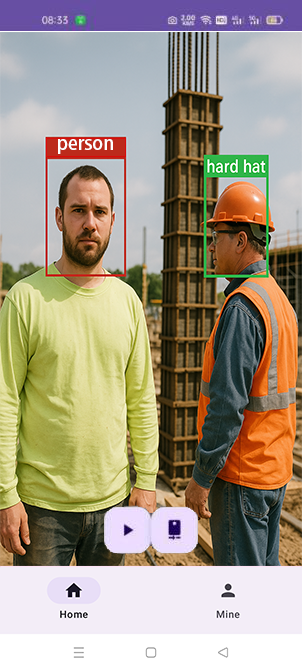
论文首先构建了一个专门针对施工现场的危险源数据集。接着,针对深度学习模型的计算效率问题,本文对YOLOv8模型进行了优化,从而提高了系统的实时性和运行效率。然后,系统部署在安卓手机,实现了低延迟的实时识别功能。
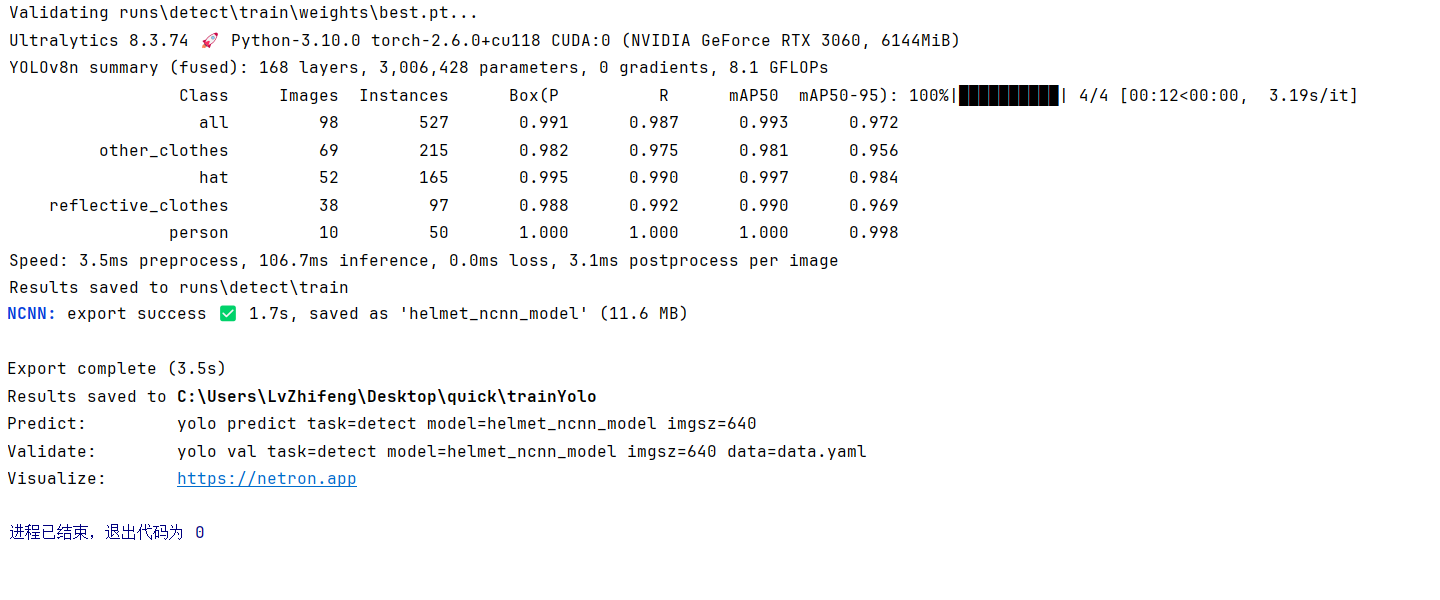
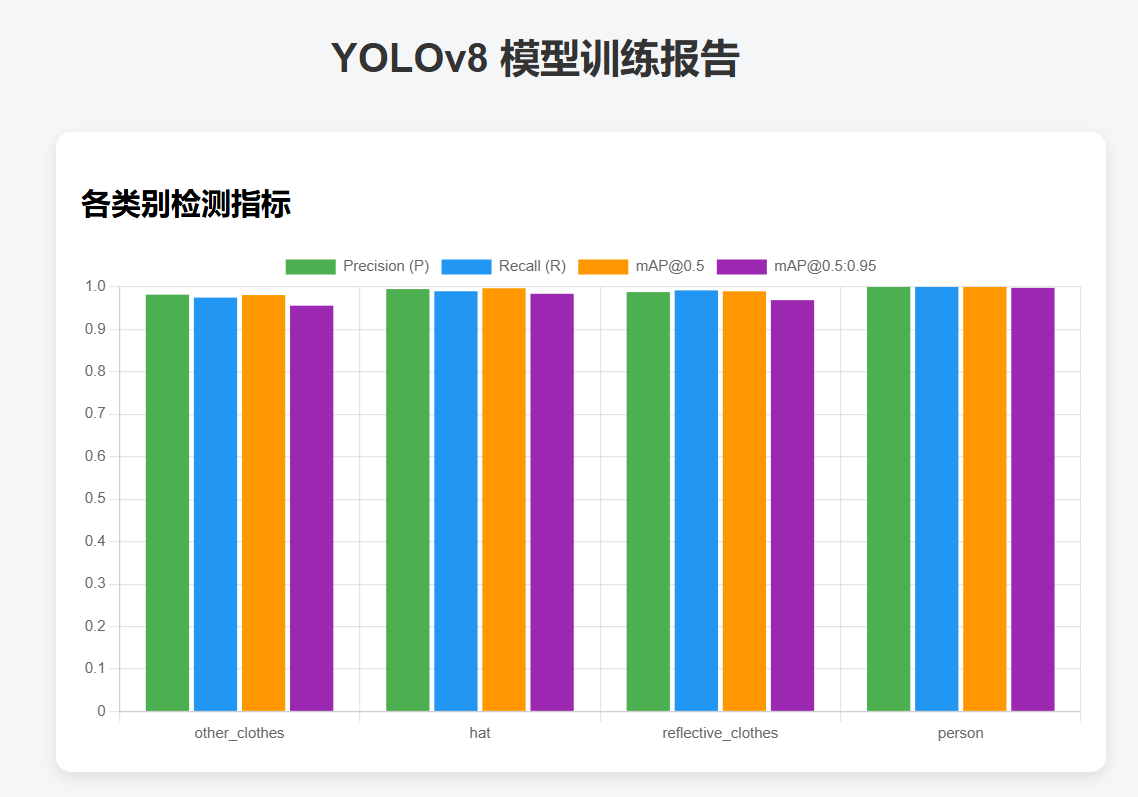
在实验部分,本论文验证了所提出系统在准确率、实时性和鲁棒性方面的优势。实验结果表明,本系统不仅能够在多种施工环境中稳定运行,还能在复杂条件下准确识别多种危险源。
最后,本论文总结了系统的创新点和不足之处,并对后续研究进行了展望。未来的研究将重点在于扩展系统的多场景适应性、提高检测精度和智能化水平,并在实际施工现场中进行广泛应用,以进一步提升建筑施工的安全性和效率。
关键词:机器视觉,施工安全,危险源识别,YOLO,边缘计算
Abstract
With the development of the construction industry, safety management issues at construction sites have become increasingly prominent. How to effectively identify hazards at construction sites in real time and ensure worker safety has become an urgent technical problem to be solved. This paper proposes a construction scene hazard identification system based on machine vision, which uses the target detection algorithm YOLO and the deep learning framework ncnn, combined with edge computing equipment, to improve the intelligent level of construction site safety management. The system collects real-time image data of the construction site, uses YOLO to detect and identify hazards, and notifies relevant personnel to intervene through an early warning mechanism, thereby reducing the probability of safety accidents.
The paper first constructed a specialized dataset of hazardous sources for construction sites. Furthermore, to address the issue of computational efficiency in deep learning models, this paper optimized the YOLOv8 model, thereby improving the real-time performance and operational efficiency of the system. Then, the system was deployed on Android phones, achieving low latency real-time recognition functionality.
In the experimental section, this paper validates the advantages of the proposed system in terms of accuracy, real-time performance, and robustness. The experimental results show that this system can not only operate stably in various construction environments, but also accurately identify multiple hazards under complex conditions.
Finally, this paper summarizes the innovative points and shortcomings of the system, and provides prospects for future research. Future research will focus on expanding the system's multi scenario adaptability, improving detection accuracy and intelligence level, and widely applying them in actual construction sites to further enhance the safety and efficiency of building construction.