摘 要
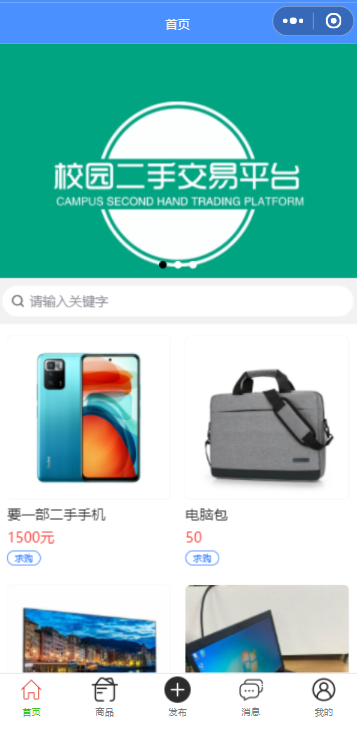
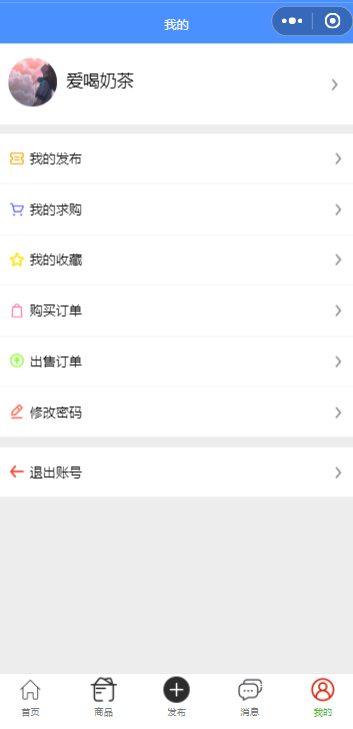
随着高校招生规模不断扩大,在校学生产生的大量学习资料和生活用品已成为校园二手市场的重要来源。然而,传统线下交易模式普遍存在信息传递不畅、交易安全性不足等问题。为此,本文设计并实现了一个校园二手物品交易系统,采用uni-app框架进行小程序开发,后端通过Spring Boot构建RESTful API,数据库采用MySQL。系统分为移动端客户端和后台管理俩大模块,客户端提供用户登录注册、商品浏览、发布求购、在线沟通、商品详情查看、举报及个人中心等功能;后台则包括用户、商品、菜单和举报信息的统一管理等功能。系统界面简洁美观,操作简单,具有良好的扩展性,能够有效满足学生的二手交易需求。通过数字化手段优化交易流程,降低了交易成本,提高了资源利用效率,推动了环保和节约意识的普及,具有重要的社会意义和推广价值。
关键词:校园二手商品;Spring Boot;uni-app;小程序;MySQL
Abstract
With the continuous expansion of university enrollment, the vast quantities of study materials and everyday items generated by students have become a vital resource for the campus second-hand market. However, traditional offline trading methods often suffer from poor information flow and inadequate transaction security. To address this problem, this thesis presents the design and implementation of a campus second-hand goods trading system. The system utilizes the uni-app framework to develop a mobile mini-program, with a backend built on Spring Boot that provides RESTful APIs, using IntelliJ IDEA as the development tool and MySQL as the database. The platform is divided into two main modules: a mobile client and a backend management module. The mobile client offers features such as user login and registration, product browsing, posting of buying and selling requests, online communication, product detail viewing, reporting, and personal profile management; while the backend module enables unified management of users, products, menus, and reports. Featuring a clean and visually appealing interface with simple operation and robust scalability, the system effectively meets the second-hand trading needs of students. By digitizing the trading process, it reduces transaction costs, enhances resource utilization, and promotes environmental protection and conservation awareness—thereby offering significant social value and strong potential for broader application.
Keywords: campus second-hand commodity; Spring Boot; uni-app; small programs; MySQL
目 录
1前言
1.1研究目的与意义
1.2国内外研究状况
1.3主要研究内容
2需求分析
2.1系统概述
2.2系统功能需求
2.2.1系统功能性需求
2.2.2系统非功能性需求
2.3可行性分析
2.3.1经济可行性
2.3.2技术可行性
3概要设计
3.1系统架构设计
3.2功能模块设计
3.2.1用户端
3.2.2管理员端
3.3系统数据库设计
3.3.1概念设计
3.3.2数据库表设计
4详细设计
4.1用户功能模块详细设计
4.1.1用户注册登录
4.1.2商品分类和在线沟通
4.1.3商品发布
4.1.4求购信息
4.1.5商品举报
4.2管理功能模块详细设计
4.2.1系统设置
4.2.2商品管理
4.2.3订单管理与处理管理
5系统实现
5.1系统实现技术
5.2用户功能模块实现
5.2.1用户注册登录
5.2.2商品分类和商品详情
5.2.3商品发布与求购
5.2.4个人中心与商品搜索
5.2.5消息列表与聊天页面
5.3管理员功能模块实现
5.3.1系统设置
5.3.2商品管理
5.3.3订单管理
5.3.4处理管理
6总结
参考文献
致谢