摘要
在传统资产管理模式下,企业、高校等组织面临资产盘点效率低、信息追踪难、资源利用率低等问题。本毕业设计旨在基于Java生态技术栈,采用Spring Boot + Vue前后端分离架构,构建一套集资产信息管理、资产盘点、调拨报废、数据统计分析于一体的资产管理系统。该系统涵盖用户模块、资产信息管理模块、资产流程管理模块和数据统计模块,满足资产管理不同角色的核心需求,实现资产全生命周期可视化管理。系统具备功能完整、操作便捷的特点,遵循相关技术规范,在性能上满足响应速度、并发能力和数据容量要求,同时在安全方面采用身份认证、权限控制和数据安全等措施。本设计为企业、高校等组织提供了资产管理数字化解决方案,推动了资产管理信息化升级,也为同类资源管理系统的开发提供了参考。
关键词:Java;资产管理系统;前后端分离;Spring Boot;Vue;全生命周期管理
Abstract
In the traditional asset management mode, organizations such as enterprises and universities face problems such as low efficiency in asset inventory, difficulty in information tracking, and low resource utilization. This graduation project aims to build an asset management system integrating asset information management, asset inventory, transfer and scrapping, and data statistical analysis based on the Java ecosystem technology stack and the front-end and back-end separation architecture of Spring Boot + Vue. The system includes a user module, an asset information management module, an asset process management module, and a data statistics module, meeting the core needs of different roles in asset management and achieving visual management of the entire asset life cycle. The system features complete functions and convenient operation, complies with relevant technical specifications, meets requirements in terms of response speed, concurrent capacity, and data capacity in terms of performance, and adopts measures such as identity authentication, permission control, and data security in terms of security. This design provides a digital solution for asset management for enterprises, universities, and other organizations, promotes the informatization upgrade of asset management, and also offers a reference for the development of similar resource management systems.
Keywords:Java; Asset Management System; Front-end and Back-end Separation; Spring Boot; Vue; Full Life Cycle Management
目录
1系统概述
1.1 研究背景
1.2研究目的
1.3系统设计思想
2相关技术
2.1 MYSQL数据库
2.2 B/S结构
2.3 Spring Boot框架简介
2.4 JSP技术
2.5 VUE框架
2.6Java语言介绍
2.7 SSM框架简介
3系统分析
3.1可行性分析
3.1.1技术可行性
3.1.2经济可行性
3.1.3操作可行性
3.2系统性能分析
3.2.1 系统安全性
3.2.2 数据完整性
3.3系统界面分析
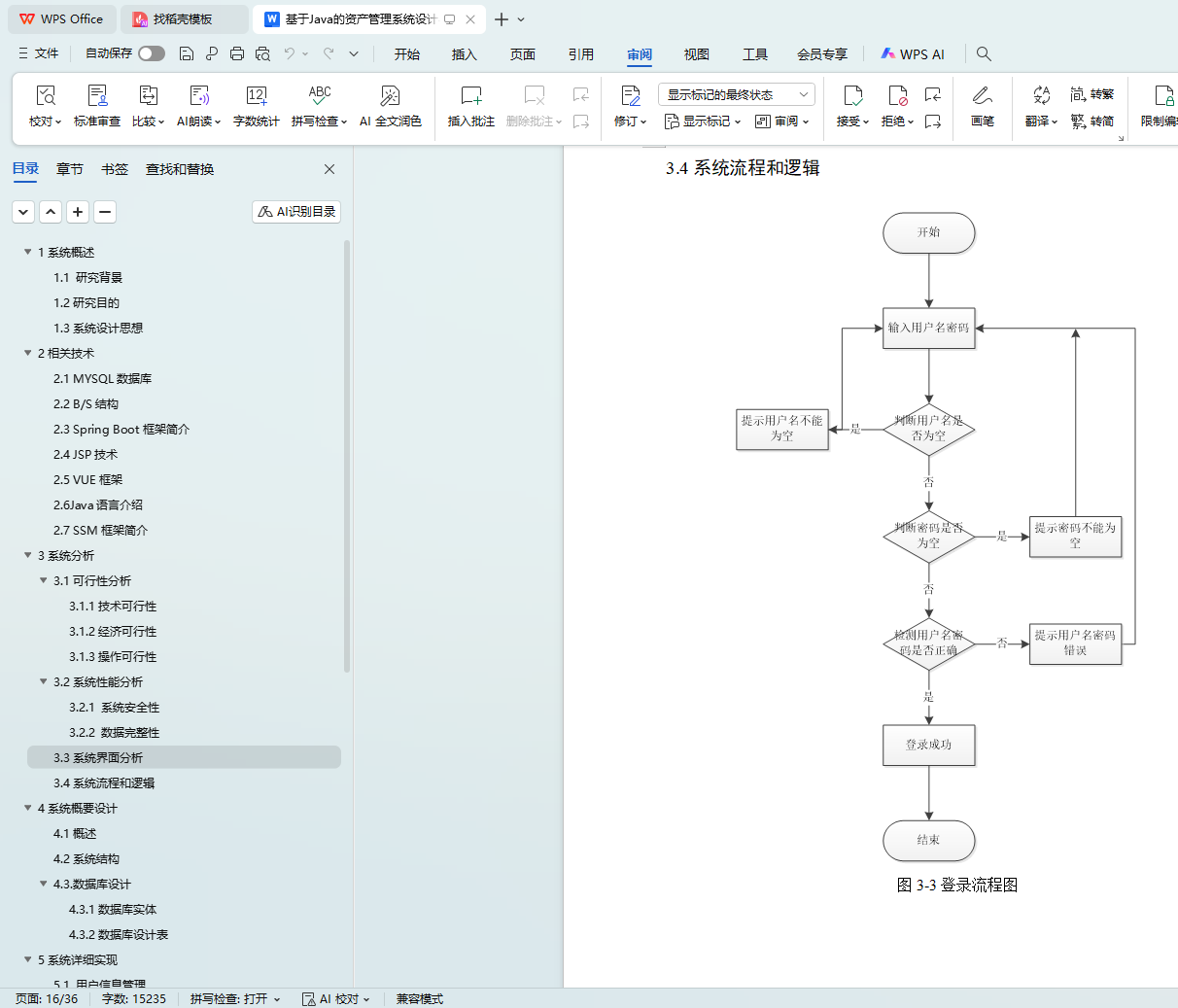
3.4系统流程和逻辑
4系统概要设计
4.1概述
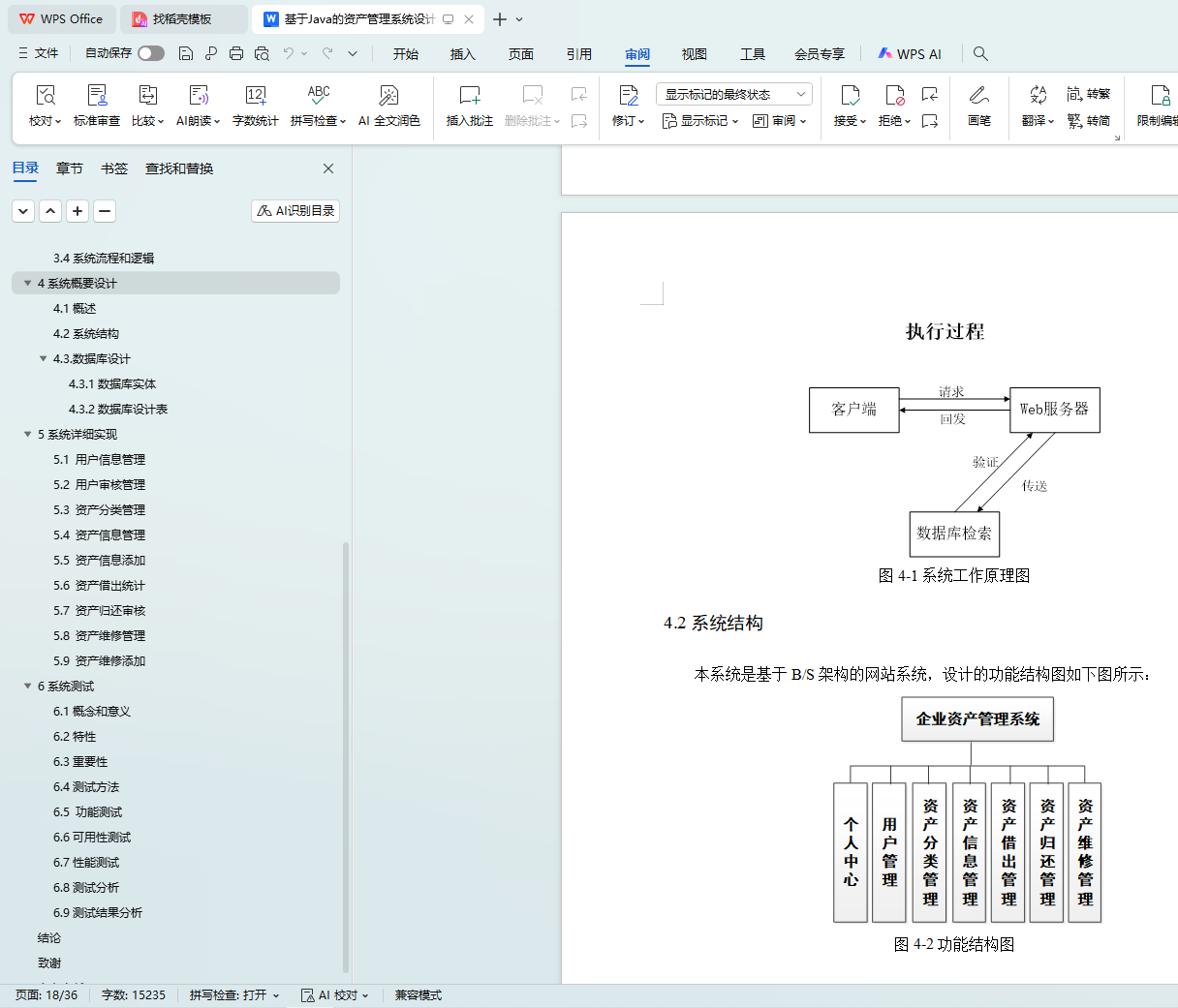
4.2系统结构
4.3.数据库设计
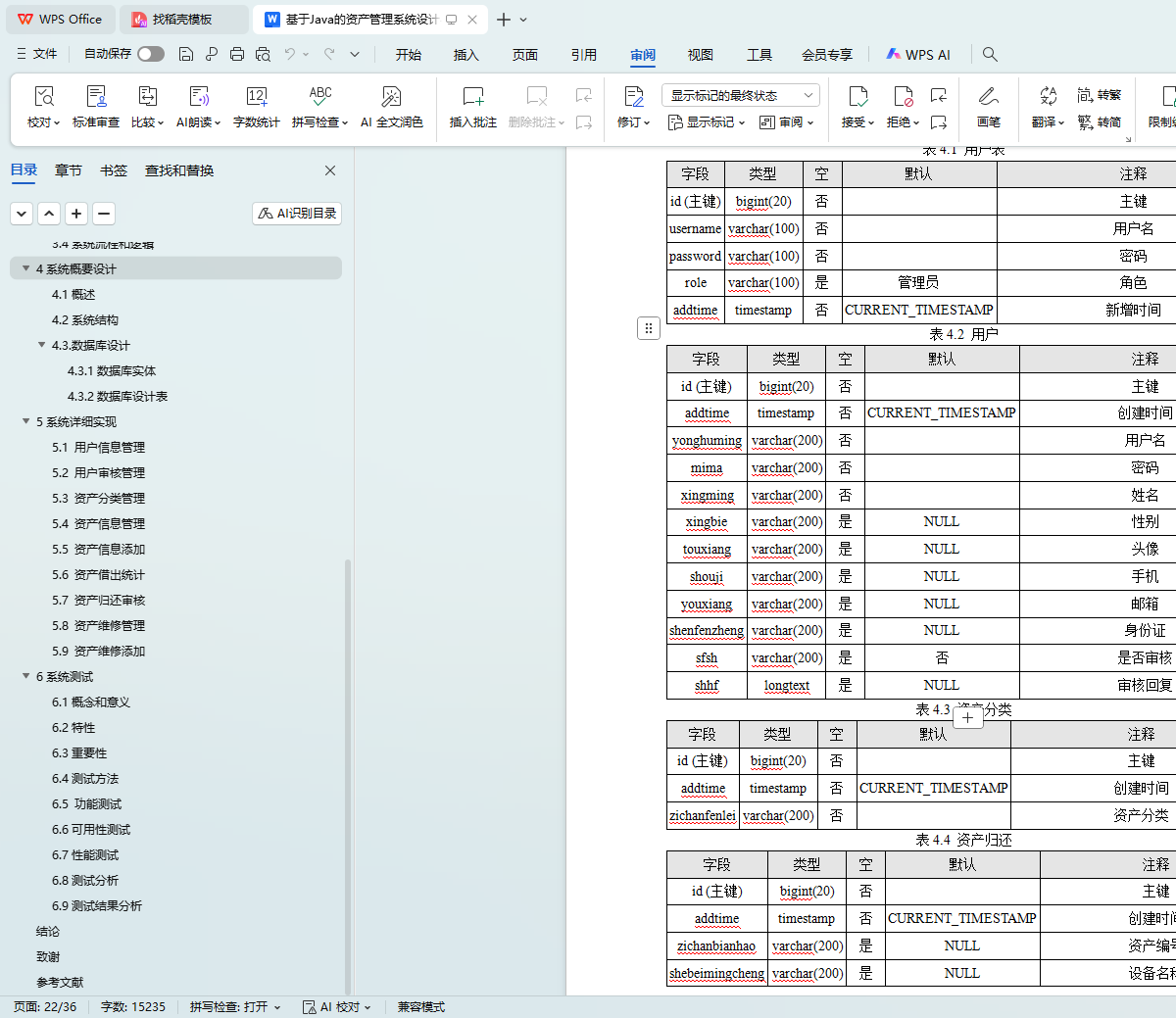
4.3.1数据库实体
4.3.2数据库设计表
5系统详细实现
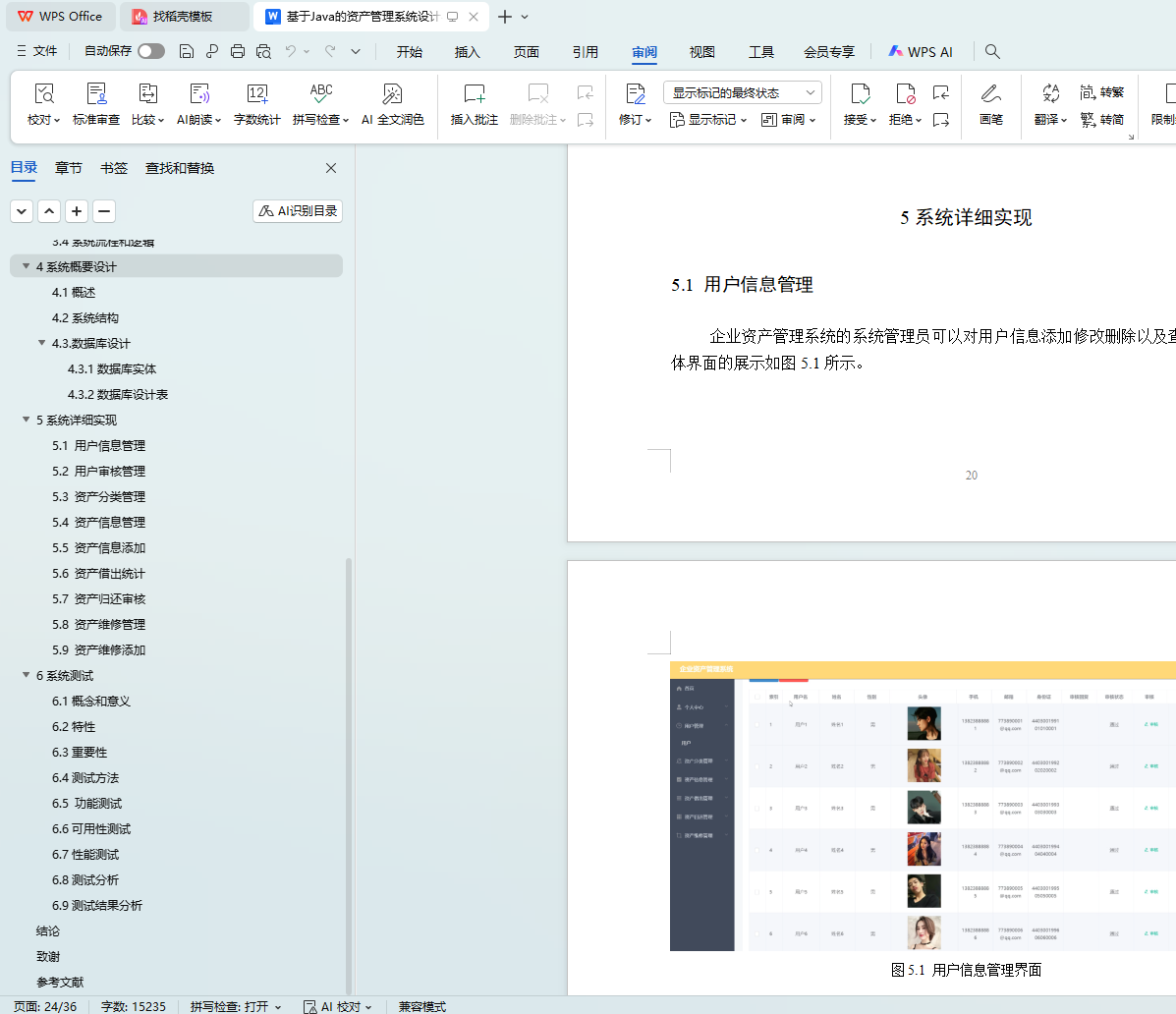
5.1 用户信息管理
5.2 用户审核管理
5.3 资产分类管理
5.4 资产信息管理
5.5 资产信息添加
5.6 资产借出统计
5.7 资产归还审核
5.8 资产维修管理
5.9 资产维修添加
6系统测试
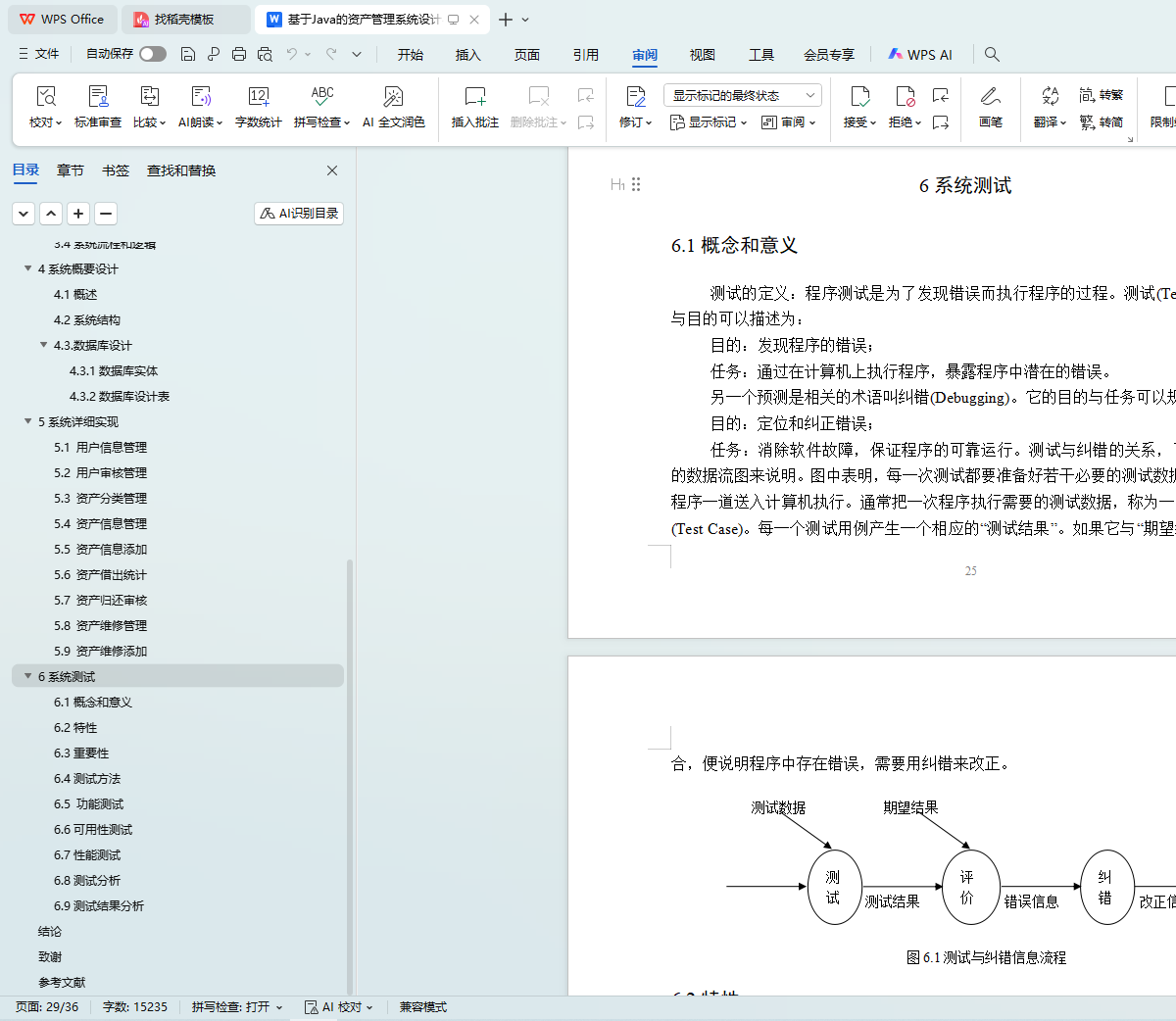
6.1概念和意义
6.2特性
6.3重要性
6.4测试方法
6.5 功能测试
6.6可用性测试
6.7性能测试
6.8测试分析
6.9测试结果分析
结论
致谢语
参考文献